


from the basement to the board room...
Skye Perry founded SSP Innovations in 2003 as a small, self-funded operation and grew it from a basement startup into a leading GIS and utility software firm through strategic focus, technical expertise, and relationship-driven service. Over nearly two decades Skye led SSP through major pivots—winning competitive ArcFM work, navigating a partner dispute with Schneider, aggressively adopting Esri’s Utility Network to become a market leader, and executing multiple acquisitions (Paleon, Wind Lake, TC Technology, 3‑GIS) while scaling the business to ~300 employees and partnering with Warren Equity Partners to accelerate growth. Along the way Skye built a values-driven culture, launched and acquired product lines (SSP Productivity, SSP Lifecycle, SSP SPANS, SSP MIMS, SSP Vision, SSP Accelerate, 3-GIS), and managed complex remote transitions during COVID.
Those experiences—strategy development, go‑to‑market pivots, M&A execution, product and service integration, scaling operations, and leading through crises—gave Skye a rare, full-cycle perspective on business building that few advisors can claim. Skye now serves on multiple boards and advises others through Perry Advisory, bringing hands‑on expertise in corporate finance, operational scaling, technology strategy, and customer‑centric leadership to help founders and executive teams grow, pivot, and navigate high‑stakes transitions. Skye has lived every stage of the founder's journey, and he brings that hard-won, real-world experience — not theory — to the companies he advises today.
2003-2006: Company Formation
I founded SSP Innovations in the summer of 2003 as a business front for the various projects I was working on in addition to my day job. As you may have guessed, the S&P in the SSP are my initials. The middle S was my ex-wife’s initial and the idea behind the “innovations” was that it would be a good term to cover just about any type of work we wanted to run through the business. I used to joke that we had a fledgling Pampered Chef division that never really made any money (but provided a lot of good kitchenware). At the time, I never imagined that SSP would become a well-known company name within the context of the GIS community. We began humbly in an office in my basement in Parker, CO.

SSP’s very first IT project was as a subcontractor for my good friend and colleague, Jeff Mertz. Together we sold and delivered a very cool custom software implementation to an entertainment company called Club Purple based right here in Denver, CO. Club Purple owned and operated many well-known bars and clubs in the greater Denver area including but not limited to the various locations of the Purple Martini Lounge. Jeff and I designed and implemented a centralized website that managed digital advertisement campaigns that allowed the company to sell custom ad space across their venues. Each campaign was built based on a set of images and/or animated Adobe Flash files (remember it was 2003) that would be rotated through in a specific order. The company then assigned the campaign to one or more monitors within each venue. We then built a small windows-service app that ran on each of the PC monitors throughout the clubs that would poll the central server to get their assigned campaigns as well as the advertisement files. Club Purple could then sell advertising based on the number of times each ad would be displayed on each screen within each club. This was right around the time we started seeing monitors over urinals, sinks, and all over clubs and this software was a ton of fun to write. There’s some more color to this story, but I’ll save that for an in-person chat!
2007-2010: Going Full Time with SSP
Fast forward a few years to 2007. I was working for Enspiria Solutions at the time and had been working with an electric and gas utility in Indiana for several years called NIPSCO (Northern Indiana Public Service Co). I was the primary resource working for NIPSCO and was working pretty much full time on that account as the solution architect for the GIS deployment. My mother passed away somewhat unexpectedly in 2005 and my youngest brother (entering high school around that time) was coming out from Florida to live with us in Colorado. I needed to take a break from traveling for work so I could be around to support my brother and the rest of our family (my first two kids were toddlers) during this time period. My boss at Enspiria, Chip Scott, was very supportive of me and my family during that period (I learned a lot about caring for employees from Chip which became a foundational element at SSP) and ended up suggesting that I could leave Enspiria to begin working with NIPSCO directly via SSP which would give me the flexibility to manage my own schedule. This was a huge blessing at the time though neither Chip nor I imagined that this would be just the beginning of SSP’s story.

SSP wrote its first yearlong contract with NIPSCO in June 2007, and I said goodbye to my friends and colleagues at Enspiria. My SSP work with NIPSCO was focused on continuing as their solution architect on the Esri GIS & ArcFM implementation project. We had just gone live with the system in 2006 and we were still making system updates, building new system integration points, and adding new software to the mix. Further, NIPSCO’s parent company, NiSource, had also made a decision to move to a standardized Esri GIS implementation alongside a Maximo implementation and I was heavily supporting those efforts as well. I established operations from my home basement in Parker, CO and made an occasional trip out to visit the client.
I would be remiss without calling out two individuals at NIPSCO who supported and encouraged bringing SSP on as a direct vendor from the beginning. Diane Buche was the project manager for the NIPSCO GIS implementation and Jill Gehrig ran the mapping & records department. BOTH were instrumental in establishing this first contract with SSP Innovations and in giving me the support I needed to take care of my brother and family. Both women have long since retired but I will forever be appreciative of the role they played in SSP’s origin story.

I had originally assumed that my work with NIPSCO might last a year or two and that I might then rejoin Enspiria Solutions. But within the first year, another utility I had previously worked with, Garland Power & Light, asked if SSP could become their primary GIS vendor. Then in 2009, a colleague from MJ Hardin, Jayson Troughton, called and asked if SSP would team on a bid for an implementation of Esri & ArcFM at Memphis Light Gas & Water (MLGW). We won that competitive RFP and began work in the fall of 2009. Then in 2010, another colleague at Swova, Angie Jennings, called and asked if we could be their ArcFM support partner for CoServ. I was still the only technical resource at SSP (also representing/leading a few other part-time contractors) and things had gotten insanely busy during these years as we were supporting 4 different customers.
My first official hire at SSP was Sara Carlson and her job description was “to do anything and everything that was non-billable (invoicing, bookkeeping, insurance, HR, etc., etc.) to allow me to focus on billing more hours!” Sara joined me in the basement a few days a week and we kept things rolling. This sufficed for a time, but it certainly wasn’t very scalable. Sara has evolved with the company and is still a major contributor today running all of accounts receivable within the finance department!

2010: Partnering with an Advisor, Defining Who We Are
Sometime in 2010, I was spending time with a friend and fellow business owner, Kyle Keegan. After hearing about how overwhelmed I was, Kyle suggested that I meet with his business advisor, Scott Barth who owned a business advisory and exit planning company called Ascend Biz 2. After getting to know a bit about SSP and me personally, Scott told me that I either needed to take a step back from the 90 hour weeks to reclaim some of my life (before I imploded) OR that I needed to flip SSP over into a W2 business, offer benefits, a retirement plan, and begin hiring employees that would allow the business to scale. Until that point in time, I had not been able to attract any full-time committed talent because all I was offering was contract work. I made the decision to take the plunge and hired Scott Barth to advise me on the journey of growth. We laid out a 5-year goal of growing to $5M in revenue by 2015 and then worked backwards with a 3-year plan, 1 year plan and then ongoing quarterly goals to begin making strides in the right direction.

A significant part of Scott’s advisement and our joint planning was on defining “who” I wanted SSP to “be” the market. I defined SSP’s core values before I hired any employees and this helped me to articulate the principles which were absolutely foundational to who we were, the value we provided in the market, and why our customers and partners wanted to work with us. These core values were utilized by SSP for almost 15 years until they were updated under new leadership in the mid 2020’s. They were regularly reviewed internally and I publicly articulated them in my first state of the union address to our industry in early 2015 (and then again at each of our SSP iLLUMINATE user conferences that began in 2017). They are certainly worth posting here!
-
Honesty & Integrity – Say what you’ll do and do what you say. This industry is all about long-term relationships and those relationships are based on integrity that is established over time. We aim to be as transparent as possible through our sales, our delivery, and our support. We may not always see eye to eye but know that my team will tell you the truth and will aim to provide accurate estimations and assessments, whatever the context might be. This applies both to our customers and internally at SSP. I guarantee you’d be surprised by the amount of information we share internally at SSP in the name of putting it all on the table.
-
Highest Value for Our Clients – Our goal in pricing our services is to bring our customers the absolute best experience they can get in the marketplace for an exceptional value. This doesn’t imply that we are cheap; instead, our desire is for each client to leave the engagement feeling like they received tremendous value for every dollar spent. We work hard to keep our rates competitive within the industry and have generally been on the affordable side of any competitive bid. Factor in the industry-leading expertise of our team and the value speaks for itself.
-
Recognized as a Trusted Advisor through Building Long Term Relationships – The trusted advisor term gets tossed around quite a bit these days so let me be very clear about what this means to me. Becoming a trusted advisor doesn’t happen overnight. You can’t just say you are a trusted advisor and get a seat at the table. Instead, I define it as being based on a relationship that is formed over time. And this relationship should initially be based on delivery success. If SSP delivers successfully for you, it establishes trust. Trust leads to additional work and when delivered successfully it, in turn, breeds more trust. Over time SSP will earn our seat at the trusted advisor table and you’ll have a valued ally at your side for everything from an educated opinion to your largest projects.
-
Technically Proficient – You might think this is obvious but let me expand on it. SSP was what you’d refer to as a bootstrapped company meaning that we were fully self-funded without any outside investors from inception in 2003 up until 2017. What does this have to do with being technically proficient? Quite a bit! We’ve had no outside pressure to grow or expand too quickly, and this has allowed for what I call smart growth. We seek to only hire the sharpest, most talented folks in the industry alongside our very selective college hire program. Therefore, by design, you didn’t see explosive growth at SSP during this time period. As a result, we could assure our customers that when you worked with SSP, you got the A-team every time.
-
Clients Like Doing Business with Us – I am very proud to say that many of our clients have become my close friends. We stay at each other’s homes when we travel, we take every opportunity to grab a drink or dinner, and we’ve established trust that goes way beyond the professional landscape. If we hit the other four core values, the fifth will naturally occur and at the end of the day, this is what it’s all about. It means we’re having fun, getting stuff accomplished, and enjoying each other’s company all the while.
If you picked up on the trust & relationship theme within the core values, it’s not by accident. I believe this theme has always resonated strongly with our customers – and the numbers support this assessment.
2011-2012: Hiring SSP’s Industry Talent & Telvent Partnership
In 2011, after setting our multiyear strategy and publishing our mission, vision, and core values, SSP proceeded to hire a number of our first employees. Importantly, this included the hire of my brother, Dean Perry, to take on sales. Dean still tells the story of how I grilled him for a day+ of interviews and then had Scott Barth grill him as well. It’s all true but I wanted to make sure we were going to be able to work well together, especially since we were brothers. It ended up being one of the smartest moves I ever made at SSP! In addition to Dean and Sara, we hired on Corey Blakeborough and Chris Cushenbery and resigned one of our early contractors, Chalmer Donahue. We had a small but very bright team! We moved out of the basement and into our first office space in Centennial CO and continued signing new utility customers while expanding our work with the current customer base.

The majority of our work in those days was centered on system implementation, system integration, and customization of the Esri and ArcFM software product lines. Around 2011, Telvent (who owned ArcFM) established a new domestic partner program. SSP was the first company to join the partner program and quickly took our place as the leading ArcFM partner implementation firm in the US. This partnership was facilitated by two Telvent employees who later became SSP employees (which says a lot) – Kenton Graber and Jessica Hartbauer. They knew me personally and vocally supported SSP as Telvent’s leading partner both internally and externally.
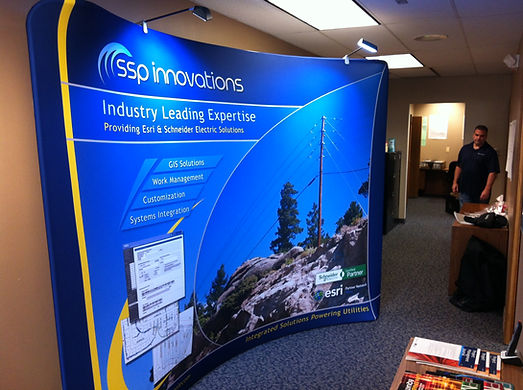
This began a period of stability and growth for SSP. We were performing solid work, and we had become the go-to partner firm for Telvent when they needed a trusted partner that would get the job done right. We continued hiring and added Jeff Mertz (the same colleague who gave SSP its first contract back in 2003) and Dennise Ramirez who joined me to form our trio of principal consultants at SSP. We soon added our first official project manager, Matt Stuart, to up our project management game and to take the load off of the consultants.

And then just a bit later, we added another ArcFM telecom expert, Brian Higgins, our director of marketing, Keith Freeman, and another group of developers. The team and I were firing on all cylinders, writing a ton of industry-related blog content (I’d love to link to some of those early posts, but SSP has archived many of them), and growing our reputation day by day.

This was also the period when SSP began hosting our fondly-remembered quarterly events – bowling, paintballing, snow mobiling, white-water river rafting, zip lining, holiday parties, and more. It was an absolute blast!

2013-2014: Expansion – ArcGIS Online & WFM
The year of 2013 was notable because Esri had released their new web technology called ArcGIS Online. We saw an opportunity to embrace this new technology and to partner with Esri on evangelizing its benefits to the utility community via our blog posts, videos, and speaking engagements. After a short period of time, SSP emerged as one of the key proponents of this new platform and we were recognized as such, both by our customers and by Esri. In November 2013, Esri republished one of my blog posts in ArcWatch showing off how my then 9-yearold son, Joshua, had utilized ArcGIS Online to track his popcorn sales (side note, Joshua later joined SSP and worked in our data group for almost five years).

In March 2014, I was invited to speak at the Esri Partner Conference plenary about how partners could utilize ArcGIS Online. And then I was subsequently invited to join the Esri Partner Advisory Council which had previously only consisted of platinum partners. SSP was a much lower-ranking silver partner at the time but I made a bit of name for myself by asking the then leader of Esri Global Business Development (GBD), Chris Cappelli, if Esri preferred my money or my engagement as a partner! Chris used SSP as an example in many instances of a partner that was intentionally and publicly engaged and aligned with Esri. This period signified SSP’s expanded notoriety and brand recognition within the Esri ecosystem (and it didn’t happen by accident)! We also won our first Esri Partner Award that year for our work with ArcGIS Online (the first of many).

Over the prior few years, SSP had formally expanded its offerings from GIS into the work management system (WMS) space. Way back in 2010, I had led an effort with Garland Power & Light alongside Mike Young and John Garrett to replace their homegrown WMS with a new web-based system that we lovingly called Workforce Management (WFM). WFM was essentially a lighter-weight version of the larger commercial systems that provided compatible unit-based design and project management for utilities (think SAP, IBM Maximo, or Oracle WAM/ERP). We provided all of the critical functionality from these larger systems but with a much better UI/UX and at a much more affordable price. We had expanded our customer base for SSP WFM with a few other small utilities – notably DCPUD and CLPUD in the Northwest. And then one day, almost out of the blue, we got a call from SCANA (now Dominion Southeast) who had found SSP WFM online and was interested in taking a deeper look. We had never intended for SSP WFM to be used by a large IOU but we were certainly excited to explore the opportunity. My brother Dean and I set out on a mission to do everything we could to close the sale. We soon learned that we were in a competitive process against IBM and Oracle which appeared to be a major setback. Perhaps we were just the “third option” that is often required in a competitive bid process? But we gave it our all and wouldn’t you know it, Dean, myself, and Corey Blakeborough nailed multiple shortlist presentations and even an onsite visit by SCANA to do a product code review (or perhaps just to make sure we had an actual office) before closing that contract for WFM product and services toward the end of 2014.
In addition to being the largest services job we had won up to that point in time, it included a large six-figure license fee which was sure to bolster our expanding business. The only remaining issue was WHO was going to run the project as the entire SSP team was already running at a very fast pace. I called in two heavy hitters from my past relationships – Aaron Patterson joined SSP as a contract PM and Chris Sanders joined us as the solution architect for WFM. It’s become a bit of a legendary story at SSP because I locked Aaron and Chris in a conference room for (only) five days and taught them everything they needed to know about WFM (or at least enough of what they needed to know). They flew to SCANA the following Monday and kicked off the project and have been seen as experts in WFM ever since. Chris learned every aspect of the product and led the implementation just as if he had written the product from scratch. We soon hired another SSP legend, Josh King, who joined the SCANA team to overhaul the underlying technology (that I had originally architected and coded) into a modernized, scalable web application. It was a great example of hiring the right people at exactly the right time – Aaron, Chris, and Josh ran the project with great success and allowed me to continue focusing on building SSP. SSP WFM was later rebranded as SSP Lifecycle and remains a product offering within the SSP family today.
2015: Pivoting Out of Partner Conflict & Adding a Pipeline Business
And then came 2015 when SSP was in for a bit of a shock. SSP had grown significantly and boasted a staff of over 20 consultants and successful work with 59 lifetime customers. We had established a strong brand in the market by focusing on relationships, smart growth and our core values. Schneider Electric had purchased our key partner Telvent and the ArcFM product line. New leadership had taken over the ArcFM partner program, and they had decided to dissolve certain partnerships with companies that they deemed were capturing too much of the ArcFM services revenue in the market. This included SSP Innovations and Schneider made a strong push to compel SSP to completely exit the ArcFM business. This was a very stressful period for me as the largest portion of our revenue was at risk. I hired good attorneys and advisors, and we dug into the issue. It turned out that while we were going to lose our partner licenses from Schneider that allowed us to perform ArcFM work, there was a clause in all of our customer’s software contracts with Schneider that allowed THEM to provide SSP with use of THEIR licenses for the purpose of performing project work.
I decided to pivot based on our ability to use our customers’ licenses and instead of reacting to Schneider’s legal push for us to stop work, we proactively went public with this information. In June of 2015, I wrote a now somewhat famous blog post articulating Schneider’s decision to end the partnership and how SSP was going to subsequently continue ArcFM work in the industry. In hindsight it was a pretty bold move, but I had to think creatively because the alternative was for SSP to cede the ArcFM work in the market which would have effectively reduced our business to the point of requiring significant layoffs. The other critical pivot in SSP’s business was that via the prior partnership with Schneider, SSP would often not pursue large ArcFM implementation projects that Schneider viewed as strategically suited for them to perform. After the partnership was dissolved, SSP began bidding on many more of these large projects and I am proud to say that to my knowledge, we didn’t lose a single competitive project to Schneider over the following several years. We put in a lot of work across marketing, sales, and delivery to reassure the customers that we were the best in the business and it worked! This was one of the first critical inflection points in SSP’s history. We took a potentially company-ending event and pivoted into the largest growth period that we had seen to date. It was a true David and Goliath story and I’m still proud of the way we handled ourselves throughout all of the interactions with Schneider and the larger market.

In the fall of 2015, we had a unique opportunity to hire on an expert in the geospatial transmission gas and liquids space by the name of Clarke Wiley. I had met Clarke a few years earlier via Chris Sanders and we had previously tried to hire him on at SSP but he elected to go another direction at the time. I kept joking with Clarke that all roads led back to SSP and after a period of time, Clarke came back around and joined the SSP team. We gave Clarke a fair bit of leeway in his role as the Director of Pipeline Services because he knew the market and technology better than anyone at SSP. Clarke jumped right in and built out a practice within SSP focused on Esri PODS, UPDM and other related PHMSA reporting tools. Later in his career with SSP, Clarke began selling managed services around his gas pipeline business and has been a major contributor to SSP’s growth over the years.

2015-2016: SSP Embraces the Esri Utility Network
Later that same year, we hit our next major market growth challenge. In late 2015, Esri first announced its plan to build a new network management software platform for utilities called the ArcGIS Utility Network (UN). Their goal was to reinvent the way that their GIS software modeled and managed electric, gas, water, and telecom networks. While this may seem like an exciting announcement, it indicated that Esri was going to eventually deprecate the Esri Geometric Network which had been in place since 1997. The geometric network was also the foundation of ArcFM and virtually all of SSP’s work at the time. We were the experts in a technology that was eventually going to be retired! We knew this fact and our customers also knew it. I predicted that as we got closer to the utility network being released, we were going to see a decline in customer spending on the older geometric network & ArcFM. The stage was set for our next identity crisis and market pivot.

I immediately identified this as our go big or go home moment. On one hand, we could wait for the utility network to be released, learn it with the rest of the vendors and customers, and try to rebuild our GIS business offerings around the new technology. But in a market with expected revenue decline due to the deprecated geometric network, this would inevitably lead to potential layoffs and further competition as SSP lost our edge to a leveled playing field. The other (go BIG) option was to immediately move to invest in the utility network and become the market leading firm with regard to knowledge, evangelism, and implementation experience. My stated goal was for SSP to actively drive the market forward and toward the utility network instead of reacting to how the other vendors and the customers adopted the new technology. This was another bold choice for SSP and certainly not one without significant risk. But it was a choice I readily made, and I quickly articulated the strategy to our employees and then started blogging and speaking about the UN. For the next couple of years, if you googled any UN-related topic, you were VERY likely to land on the SSP website, an SSP video, or an SSP e-book (credit once again to our amazing marketing team led by Keith Freeman who worked tirelessly to broadcast every idea I and our team had to the market). The Esri UN became almost synonymous with SSP!

As we headed into 2017, SSP launched our inaugural user confernce called SSP iLLUMINATE. This was a major platform that allowed us to continue educating the customer community on the Esri utility network and SSP's plans for the future.

2016-2017: Seeking Outside Investment
It was at this same point (going into 2016) that I stepped back and took an honest look at the business. We had surpassed almost every small business failure statistic including years in business (13 years, going into our 10th year of full-time operations), revenue growth (approaching $10M), and number of employees (40+). I had been working 60-90 hours a week for almost 10 years straight while raising three kids (and my brother). And our successful business was heading into the most unpredictable period of its lifespan as we attempted to strategically plan for this massive technological change in our industry.
As mentioned earlier, I had bootstrapped SSP from 2003 until this point in time in 2016. I absolutely wanted to use the Esri UN as the catalyst to take SSP to our next level of growth but I began to consider ways to lower my personal risk as we tackled this unpredictable market. After researching many options to lower my risk while attacking this unique market opportunity, in mid-2016 I made the decision to hire an investment banker to help me find potential investors who would be willing to purchase a portion of SSP Innovations while allowing me to maintain significant ownership as well as control over the business. When it came to choosing an investment banker, my approach was very similar to selecting a good partner – honesty, transparency, and relationship mattered significantly. I believe strongly that the individual banker matters more than the banking firm. SSP had been approached for acquisition quite a few times over the prior ~3 years by other partners and competitors (none of them a good fit) and I had met a lot of bankers during this process. I chose to work with an investment banker named Andrew Sannes and the only reason I feel comfortable mentioning him here in my story (10 years later) is that he did a great job of representing me/SSP and Andrew and I have maintained a strong relationship over the years. I have referred many colleagues to Andrew and he has brokered the investment/sale of many of my colleagues/friend’s businesses.

Andrew and I marketed the investment opportunity to a large number of strategic businesses in SSP’s industry as well as to a large number of private equity groups (PEGs). If you’re not familiar with private equity, it is worthwhile to understand the difference between private equity and venture capital as they are very different types of investors and they invest in very different types of businesses. Private equity typically invests into businesses that are already very profitable, have strong leadership and processes in place, and that are primed to grow significantly via further investment and oversight often focused on scaling up the business along with making strategic acquisitions of other accretive businesses. This profile matched SSP very well and I was absolutely looking for a partner that wanted to allow me to maintain control over SSP’s strategy and growth (for reference, I was 37 years old at the time and very excited about the future potential). The challenge was that I was very honestly pitching to a group of potential investors by explaining that I expected the market to take a 24-month dip (while waiting on the Esri UN to be released and stabilize) while also asking them to support SSP dramatically expanding during this same period. I believe I presented a compelling narrative backed by a strong strategy which resulted in significant interest from the pool of investors.
Andrew and I took our time, met with a lot of investor candidates, and engaged the SSP leadership team in the decision. After about a 6-month process, we found a good fit with Warren Equity Partners (WEP) based in Jacksonville, FL. WEP had recently been founded by several seasoned private equity execs who had worked for a much larger PEG based in New York for many years. They had decided to branch out on their own, move to FL, and were seeking investments into small to medium market infrastructure-related companies. On April 12, 2017, we announced the acquisition of SSP Innovations by Warren Equity Partners. As has become typical with my leadership approach, I met with the entire SSP team to share the news and then published the news publicly in a blog post. You can read the post for more info but, most importantly, I chose WEP because they committed to:
-
Keep SSP’s unique identity in the industry
-
Maintain SSP’s (pretty amazing) culture
-
Support SSP in growing our market presence in the coming decade
-
Maintain my leadership of the company and our vision and direction for the future
-
Possess a strong understanding of the utility, pipeline, and GIS industries
-
Have experience in, and a desire to work with, services-focused businesses
-
Provide capital to support increased organic growth as well as growth by acquisition
I maintained a large ownership stake in SSP and was fully ready to leverage the Esri UN to grow SSP’s brand, competencies, and to invest into utility software product development. We had just over 40 employees at the time and we were ready to grow!
It is also worth noting that in the fall of 2016, we took the entire company on a 10-year celebratory Carnival Cruise as our Q3 quarterly event. We paid for each employee’s airfare, cruise fare, and drink package and allowed them to bring a significant other for a flat $1K. It was an absolutely amazing experience and is still talked about today. I had originally hoped I could announce the private equity investment on the cruise but the timing didn’t quite work out so we just stuck with the tag line “SSP - 10 years and still cruising…”


2017-2018: Acquiring Other Utility Businesses
My first move after partnering with WEP was to bring in additional leadership talent to allow SSP to scale up. I had already been working on the acquisition of Paleon Solutions (an Esri startup partner) prior to the WEP investment and we quickly closed that deal in June 2017. We added Paleon’s AMI-related products to SSP’s product offerings and introduced Aaron Patterson as SSP’s president (you’ll note Aaron had already been a contract PM with SSP since 2015 and knew our culture and our people which made it an easy transition) and Adam Tonkin as SSP’s CTO. Adding these operational leaders freed me up to focus more on SSP’s overall strategy, customer success, and additional acquisitions that I felt we needed to make to grow our overall offerings to our target utility market. I have worked with Aaron and Adam for virtually my entire career at multiple companies. They remain two of my closest friends and it was a wonderful opportunity to be able to acquire their business and to bring them in to help me grow SSP.

On January 17, 2018, we announced that SSP was in the process of acquiring our primary GIS data partner, Wind Lake Solutions. While SSP had historically focused on GIS implementation consulting and implementation services, Wind Lake added a very strong team of data experts – both data editors and a wealth of automated data migration expertise. Wind Lake also brought SSP a strong utility joint-use management product called SPANS. This acquisition added additional offerings to the SSP portfolio and was an absolutely wonderful cultural fit. I worked directly with all four of Wind Lake’s owners (Dave Coates, Diana Coates, Gary Miller), but it is worth calling out Susan Smith-Lee as she immediately joined our leadership team and helped guide both Wind Lake’s and SSP’s strategy for many subsequent years. Almost a decade later, I am thrilled to say that this business is alive and well within SSP and many of the original Wind Lake staff are now leaders within the larger SSP organization – Bob Degroot (data team management), Thomas Burmestier (project management), Jordan Kolata (sales), and many amazing technology leaders – Dean Peterson, Rich Zamorski, & Peter Stevlingston to name a few.

Just a few months later that year, on June 25, 2018, we then announced SSP’s acquisition of TC Technology who was a mainstay provider of mobile GIS and work management software to our industry. Up until this point in time, SSP had partnered with various mobile software providers while also becoming experts in Esri’s native mobile applications. But we felt strongly that SSP needed to provide our own mobile technology stack and TC had just the right combination of product, people, and culture to join the SSP family. The SSP MIMS (mobile information management system) product has become another foundational product within our offerings and it is heavily used across the utility industry for mobile GIS work management. Several TC folks have become significant leaders within SSP including John Selkirk (product engineering), Zoe Selkirk (product management), Carrie Turner (marketing), and Marius Rocher (software engineering).
It was around this same time that one of my long-time industry partners, good friends, and mentors came on board at SSP to help us grow the business. Darrell Rhodes joined SSP in June 2018 and initially focused on helping us integrate the Wind Lake data business into SSP’s overarching strategy. His role quickly expanded into running the data business for us then onto running all of system implementation & data. This phase of growth was especially meaningful to me because I had the opportunity to bring in some amazing leadership talent that had also been long-term mentors and friends of mine for many prior years (Aaron, Adam, Darrell, just to name a few).

2018-2019: Pushing the Esri UN Forward
If you remember back to my investment thesis for bringing in WEP in 2017, I had predicted that the market would slow down a bit as the older Esri geometric network (and related platform) hit its maturity phase and as the market anticipated the release of the new Esri UN. When I brought WEP into SSP, I had been estimating a ~24-month stall in the market. This definitely came to fruition, but it ended up lasting for a much longer period. Esri released v1 of the utility network in January 2018 though SSP had begun evangelizing on the new technology back in 2016. In truth, SSP likely contributed to the stall in the market spending on the older legacy technology because we were pushing the Esri UN so hard. But it was a very important part of our strategy to be first to market with knowledge, expertise, software product and hands on experience around the Esri UN.

The utility market generally moves pretty slowly and there weren’t many large utilities quite ready to make the move to the Esri UN in 2018. To continue building our Esri UN momentum, SSP introduced our new UNAP (Utility Network Advantage Program) offering in early 2018 which would provide a utility with analysis of all their GIS-related systems and processes to build a multiyear roadmap to transition to the Esri UN. These roadmaps provide each utility with guidance around the technology, the processes, and the change management requirement successfully implement the upgrade. The UNAP offering did well in the market and we continued to build out our consulting offerings around the Esri UN under the additional leadership of Mehrdod Mohseni who had joined our team in mid-2017. The following year in 2018, we also hired a long-time friend and customer, David Miller, to join the consulting team to support UNAP and the various other consulting efforts. David brought a wealth of knowledge and a unique customer viewpoint to the consulting group and is now seen as one of the key voices of SSP in the industry.
The UNAP program subsequently allowed SSP to win a number of large Esri UN implementations. We additionally won a number more of these projects via competitive bids over the next five years. Many of these customers also selected our product extension, SSP Productivity, as their Esri extension for network management. The stalled spending in the utility GIS market ended up lasting closer to four or five years instead of my predicted two years but our strategy of getting ahead of the rest of the vendors in the market worked quite well and we appeared to be off to the races and were firing on all cylinders.
2020: Pivoting as COVID Impacted the World
And then right in the middle of this growth period, the COVID 19 pandemic began. I was attending the Esri Partner Conference in Palm Springs California from March 7-11, 2020 when I first realized that this virus was going to potentially have a major impact on the world. As I flew home to Colorado on March 11, the world began to shut down. Our leadership team and board quickly met to establish our response plan. SSP had always been a relatively heavy travel-based company (customers, partners, conferences, SSP office visits, etc.). We believed we could pivot and complete most of our work completely remotely though there were some doubts as well. Further, there were some concerns about whether our utility customers would pause and/or stop their implementation projects. We agreed to plan for the worst (a significant downturn), hope for the best (uninterrupted work with a pivot to remote operations), and to establish triggers and levers within the business to allow us to respond quickly if we started seeing weaknesses in the business and/or market.
We were blessed that our customers supported the move to remote operations and, in fact, fully embraced it as they were moving to working remotely as well. We agreed to de-scope most of the travel from our large projects and asked our employees to double down on their efforts around proactive and thorough communication, documentation, and our overall focus on quality. I am proud to say that our SSP team rose to the occasion with flying colors. I’d be lying if I didn’t confess that we were a bit worried about how our first week-long remote workshop was going to go but, in the end, it was a smashing success.
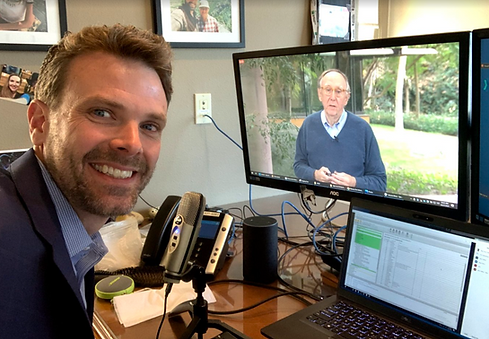
In addition to the changes we made around our customer projects, we implemented an internal culture committee focused on maintaining a connected culture within the company. They branded their efforts "QuaranTEAM" which I quite liked. We had online competitions, themed picture sharing challenges, and various other engaging activities all geared toward getting to know each other better and staying connected. This started out great but proved to be particularly tough as the pandemic wore on. The virtual happy hours got old, zoom fatigue set in, and some of us yearned to return to our in-person culture which had always been a big part of our special sauce. But our team continued to perform regardless and 2020 and beyond were all solid growth years for SSP.

Looking back, I definitely had a growing realization that the way we did business had changed forever. Like many technology companies, we have never fully returned to the office. While we have incentivized our employees to come back to the office in the years since 2020, we have never tried any form of forcing the issue because of the risk of losing our talent. In my opinion, this has commoditized the IT industry by eliminating a company’s ability to define itself via a strong, connected, in-person culture. We have all done our best to cultivate a remote culture, but we now hire remotely and ship laptops to new employees. And in this new paradigm, employees are much more likely to interview for a new job, accept a new position, and resign from their old post without ever leaving their (home) office chair. Thus, the commoditization of these IT positions. If my competitor offers one of my employees 10% more to do the same job, there’s a lot less to keep them at SSP vs. the old days when their friend group, their coworkers, their crew, and the engaged culture of the company mattered more than just about anything else. To be clear, culture isn’t dead within IT companies, but it is much, much harder to keep your employees feeling connected and engaged. Cultural engagement always starts at the top of a company – I was certainly doing my best, but the cards were stacked against every CEO out there. Looking back, we were able to maintain most of our talent through the COVID years and I’ll always be proud of that!
2020-2021: SSP Acquires 3-GIS
In the heart of COVID (mid 2020) we received a unique opportunity to take a look at acquiring the industry leading telecom GIS business, 3-GIS. SSP had been performing telecom work for our utility customers since about 2013 but our work was primarily focused on the telco operations within utility companies and our offering was solely based on the ArcFM Fiber Manager product line as well as custom enhancements. 3-GIS, by comparison, had a large footprint with the for-profit telecom industry including some of the world’s leading telecom and cellular providers. Their 3-GIS Web product was a web-based network management system based on Esri and provided customers with a sleek and modern platform for managing their fiber optic (and other commodity) networks. 3-GIS was primarily a software product business with some services vs. SSP which was primarily a services business with some product. We immediately saw the potential synergies in combining forces. 3-GIS had been founded by three industry vets, Tom Counts, Tommy Siniard, and Jerry Golden (lovingly referred to as TTJ by many in their company). I had worked with the 3-GIS staff a couple of times over the prior 15 years and had always been impressed.
SSP closed the acquisition of 3-GIS on January 4, 2021 as our 4th targeted industry acquisition. It was a slightly different acquisition for me/SSP because the first three acquisitions (Paleon, Wind Lake, and TC Tech) were companies that I had proactively targeted to add competency to SSP’s geospatial utility business. 3-GIS was a large and successful product business in an adjacent industry. For this reason, we elected to maintain the 3-GIS brand and organizational structure to continue to allow 3-GIS to attack and win in the telecom market. Many years prior to SSP acquiring 3-GIS, TTJ had named Dustin Sutton as the President of the company. While TTJ provided advisory and management services to SSP for a period of time, Dustin continued on within the SSP family as our president (and later GM) of the telecom line of business. 3-GIS has amazing software, services, and customers but what really made this acquisition work was the people. We shared similar core values and a similar culture, and this has allowed 3-GIS to continue their growth and success under the SSP brand. If you’re wondering whether acquiring another company in the middle of COVID was tough, you are correct. But I feel we navigated the timing and the interactions with our staff decently well. My goal was to ensure the 3-GIS staff knew they were joining a company that cared about them as people in addition to their impressive market offerings.

As we pushed forward into 2021, we were now running two distinct lines of business (utility and telco) while working to integrate and upgrade all of our back-office systems. The SSP family had grown from around 40 employees in early 2017 to right around 300 employees in 2021 which showed great progress against the goals we had set out in partnering with WEP in April 2017. Our Esri UN strategy had worked well (albeit a bit slower than originally planned but we couldn’t control everything in the market) and we were excited about the opportunity to have SSP and 3-GIS learn from each other (services vs. product maturity). By this point in time, the business had certainly exceeded my wildest dreams dating back to our humble roots in my basement in 2003.
2021: SSP Invests into AI
Right around that same time in 2021, another geospatial industry veteran approached SSP to pitch us on creating a new product using machine learning, AI, and computer vision. Up until 2021, I had only known Peter Batty by name and as a worthy competitor. Pete has a long history in utility GIS and had previously served as CTO of both Smallworld and Intergraph before subsequently co-founding Ubisense which became IQ Geo. If you’re not familiar with these companies, you just need to understand that they had all competed directly with Esri (and Esri utility partners like SSP) dating back to the mid-1990s. I had met Pete at a few industry conferences and had even presented to customers back-to-back with him from our respective competitive corners. I was certainly a bit cautious when he approached SSP via his relationship with Aaron Patterson. We did our due diligence and found Pete’s technology to be quite unique and aligned with SSP’s strategy. In April 2021, we welcomed Pete to the SSP family as our Chief Research Officer and began work on creating SSP Vision, one of the industry’s first AI-enabled mobile applications that allowed users to gather utility and telecom data from the field by simply pointing the camera and confirming some basic data. This investment was aligned to our strategy of continual innovation and leading the industry toward better and more efficient toolsets.

2021-Current: Skye Steps Back, SSP Hires a New CEO
Overall, in mid-2021 things were humming along quite nicely at SSP. We had a strong leadership team in place, had shown impressive growth in people, revenue, and competency, and we were articulating a strong future strategy to the market.
On the personal front, however, my family was going through some tough events. Coming out of COVID, my youngest daughter encountered significant mental health challenges and was hospitalized several times beginning in August 2021 and continuing for several years. The details of that story are my daughter's to tell and not mine, but she approved me including these events in my story as it was a very tough time period for everyone involved (especially my daughter) which resulted in a lot of personal and professional changes. I am blessed to report that today, five years later, my daughter is healthy and doing great. But at the time, she quickly became the focus of our world. I immediately took a step back from my daily duties to be in the hospital and generally available to my daughter and the rest of our family and a few months later, I and the SSP board made the tough decision that I should step out of the CEO position at the end of the year.
This type of family upheaval is one of the only events that could have compelled this decision for me. I have replayed the events of 2021 and 2022 in my mind a million times over since then and I believe I would have made the same decision every time. Prioritizing my family over my career & company was the right thing to do though it was a pivotal moment in my life and that of SSP.
In January 2022, I announced that WEP and I had selected Patrick Vardeman to succeed me as CEO at SSP Innovations. Patrick had previously worked in sales and later as the President and CEO of a software company called Accudata Systems. While at Accudata, Patrick had partnered with several individuals who later joined Warren Equity Partners. They introduced Patrick to me, WEP, and SSP as a CEO who had a proven track record of working with founders and technology. As Patrick assumed the position, I transitioned to Chairman of the Board and continued to support the company in corporate finance and sales while also being available to my daughter and family as we continued that journey.

Since then, I have continued to serve on the board of SSP, played a lead position in implementing Oracle NetSuite SuiteProjects Pro at SSP which led to the creation of SuiteProjects Reports, and begun to advise/coach several other businesses which led to the creation of Perry Advisory.
Additional Thanks
I have been tremendously blessed in my career to work with so many amazing and talented people. There are at least another fifty to one hundred individuals that I could mention by name as being impactful to my SSP story (and I truly pray I haven’t offended anyone by omitting them). I wanted to take a quick moment to call out a few more individuals who have been with me for a long period of time, have been instrumental to SSP’s growth, but were not previously mentioned:
-
Konstantin Korchakov (2014)
-
Colton Frazier (2015)
-
Joaquin Madrid (2015)
-
Ian Martin (2017, with TC Tech since 2004)
-
Josh Albo (2018)
-
Kim King (2018)
-
Keith Hupperts (2018, with Wind Lake since 2017)
-
Ryan Bechtel (2018, with Wind Lake since 2017)
-
Dave Gura (2019, with TC Tech since 2017)
-
Jill Shadwell (2019)
-
Phil Dunn (2019)
-
James Harper (2020)
-
Dave Disera (2020)
-
Jeff Cegielski (2020)
-
Aaron Leese (2021)
-
Liam Perry (2021)
-
Nassar Sokh (2021)
-
Todd Rhodes (2021)
-
Jeff Machamer (2021, with 3-GIS since 2006)
-
Kyle Siniard (2021, with 3-GIS since 2007)
-
David Stoner (2021, with 3-GIS since 2007)
-
Michael Measels (2021, with 3-GIS since 2013)
-
Annalize Kirsten (2022)

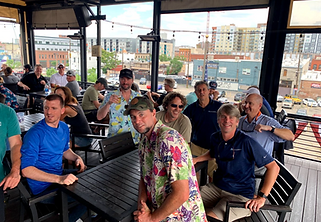

SSP Innovations has truly been the journey of a lifetime for me, from the basement to the boardroom, and remains one of my most significant achievements and the conduit for allowing me to impact the lives of many others. I remain grateful and humble as SSP continues its journey into the future.